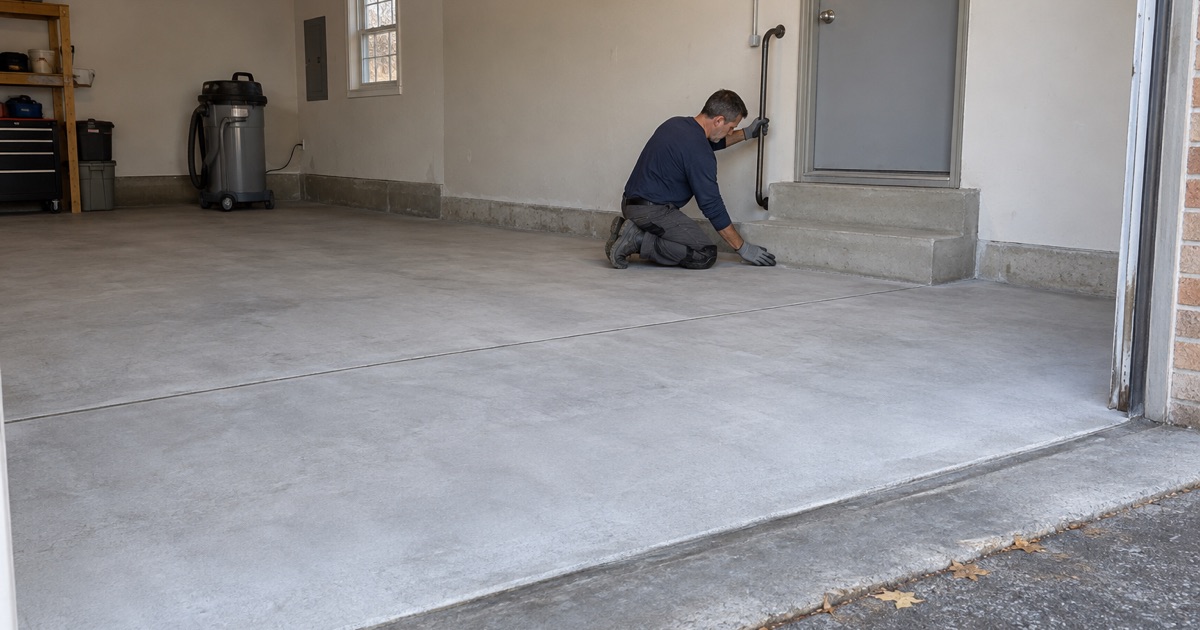
How an Epoxy Garage Floor Job Runs
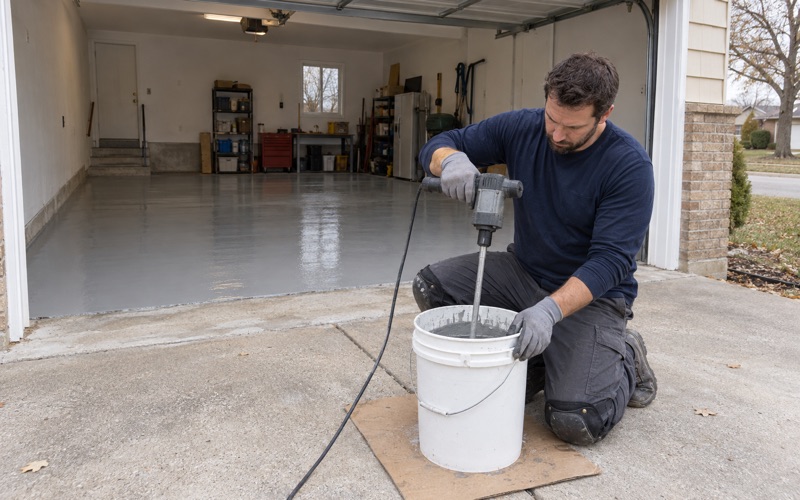
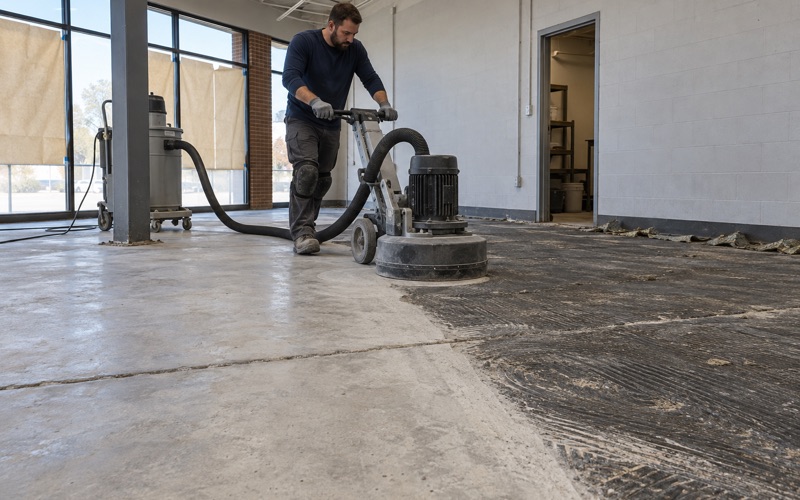
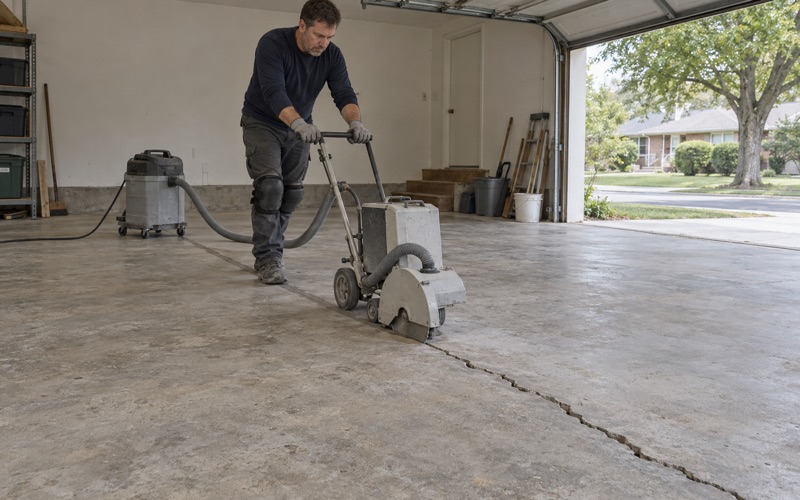
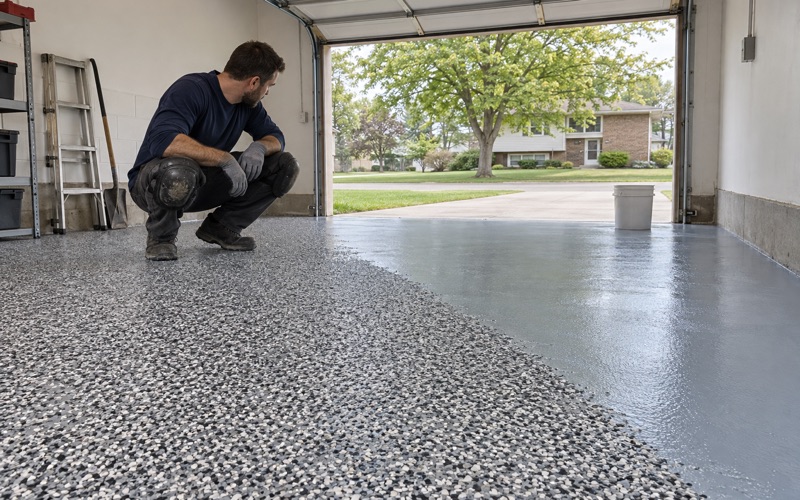
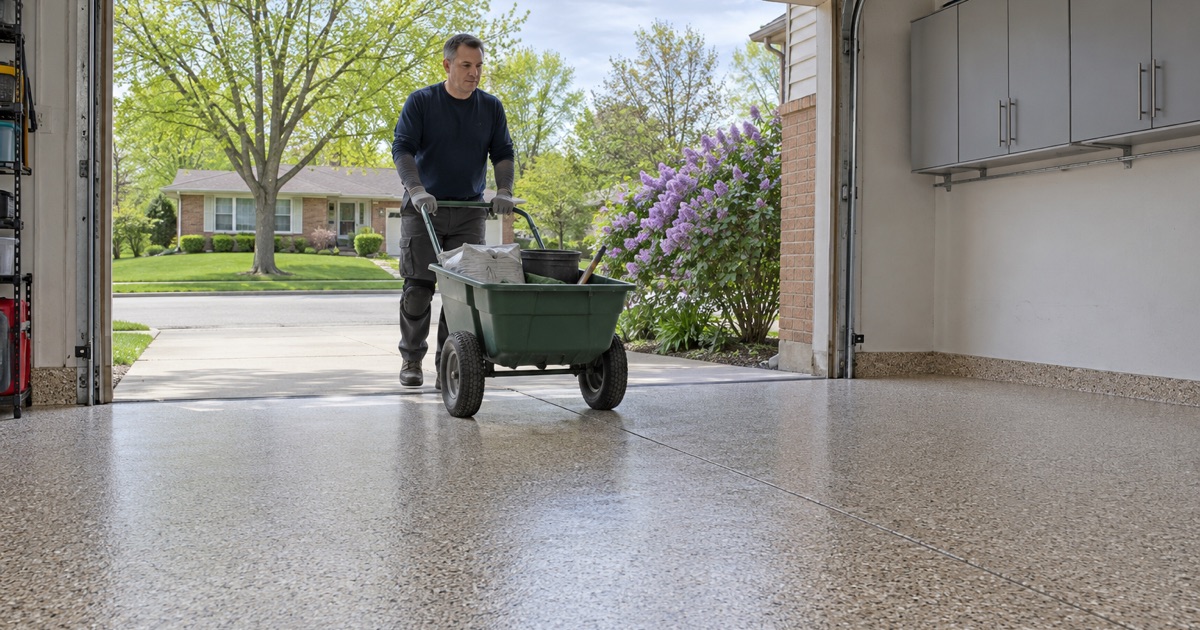
A garage job starts with a look at the slab, a moisture test and a written proposal, then moves to grinding, crack and spall repair, the base coat, the broadcast and the topcoat. We tell you the cure times before we start, so you know when you can walk on the floor and when the car can come back in.
Attached Garages and Keeping Dust Out of the House
Most Lombard homes have the garage attached, which puts the grinding dust and coating odor one door away from the kitchen. Our grinders run with vacuum dust collection at the machine, we seal the house door during the work, and we choose low-odor products where the system allows it.
Garage Slabs Poured Without a Vapor Retarder
The International Residential Code lets a detached or attached garage slab be poured without the vapor retarder required under living space, and Lombard has not amended that exception. That means moisture can rise freely through many garage floors, which is why we test rather than assume the slab is dry.
Lombard’s Attached-Garage Floor Rules
The village’s own residential rules call for wire mesh in attached-garage floors, an approved noncombustible floor surface, and restrict dry calcium chloride as a set accelerator. Calcium chloride left in a slab can draw moisture and interfere with coating adhesion, so it matters on a new pour that is going to be coated later.
Moisture Testing a Garage Slab
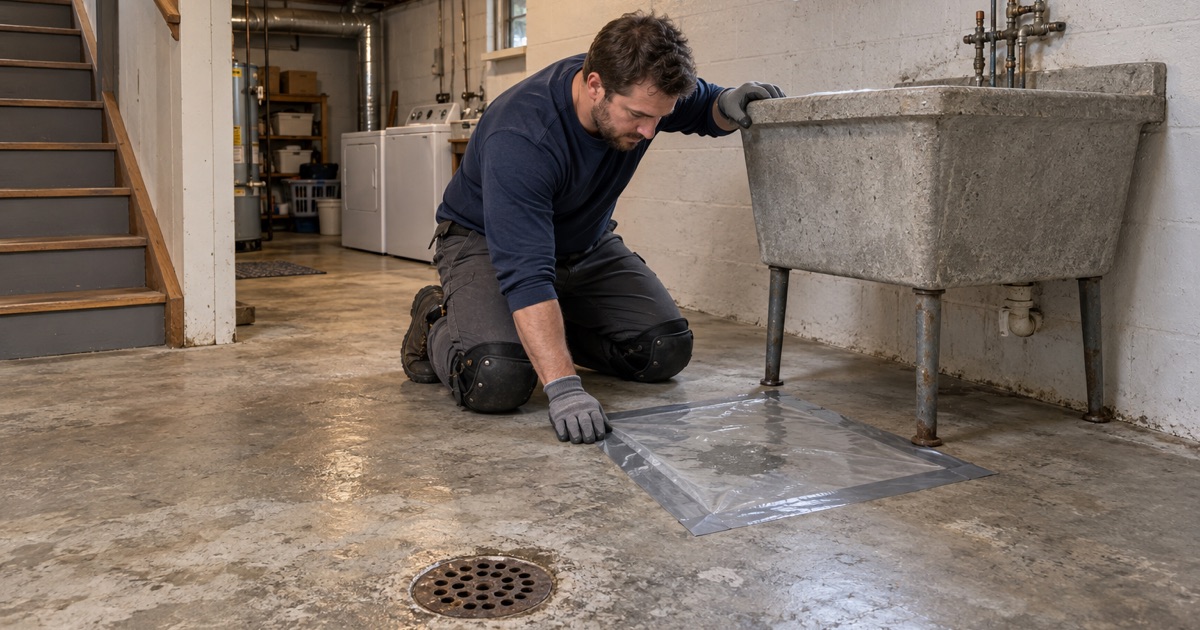
We use the ASTM D4263 plastic sheet test as a quick screen and calcium chloride vapor emission testing under ASTM F1869 or in-situ relative humidity probes under ASTM F2170 when the numbers matter. The result decides whether a standard primer is enough or a moisture-mitigation primer goes down first.
Coating a Slab Versus Replacing It
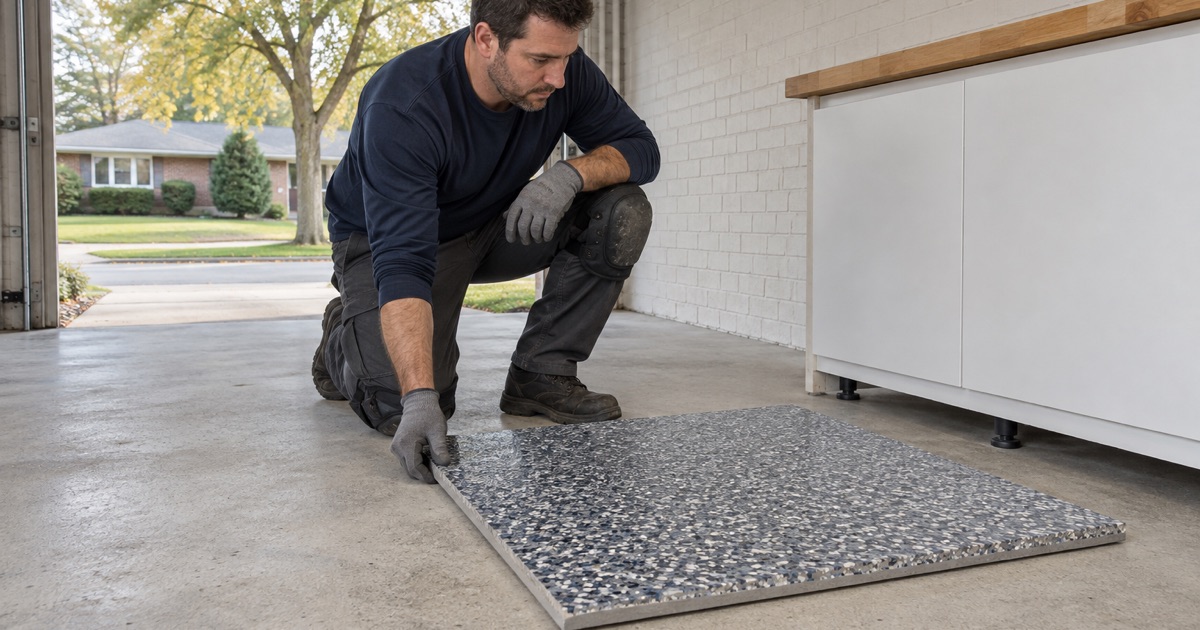
A coating is a finish, and the village’s code keeps finish work like painting and tiling exempt from permits, but replacing a slab is structural work that is not. If the concrete is badly heaved, settled or crumbling, we tell you it needs replacing first, and the permit question goes to the Building Division before anything is scheduled.
What Brine and Rock Salt Do to a Bare Slab
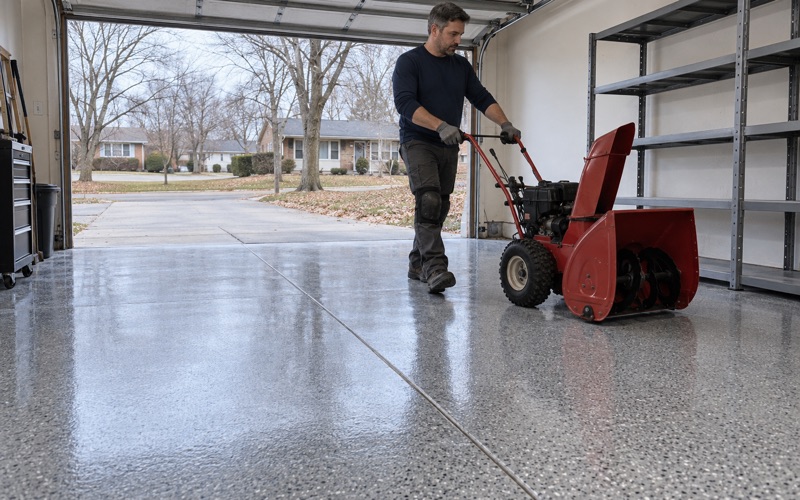
Every winter, cars carry brine and rock salt into Lombard garages, and that wet salt sits on bare concrete through repeated freeze and thaw. It scales and pits the surface over time, so we pick garage systems with a sealed, chemical-resistant topcoat that keeps salt water on top of the floor where it can be squeegeed out.
Cold-Weather Coating and Waiting for Spring
Epoxy needs the slab itself, not just the air, to stay warm enough through the cure. The weather stations around Lombard average more than a hundred freezing nights a year, so an unheated garage in deep winter may simply have to wait, and we would rather move the date than install a floor that cures soft or develops amine blush.
Hot Tire Pickup and Peeling
A warm tire pulled into a garage softens a thin or poorly bonded coating, and when the car backs out it can lift the film right off the slab. Hot tire pickup is mostly a prep and thickness problem, which is why we grind the slab and build a 100% solids epoxy base rather than rolling on a thin water-based coat.
Store-Bought Kits Versus a Built-Up Floor
Big-box epoxy kits are usually water-based, thin and applied over an acid-etched slab, which is why so many of them peel within a few seasons. A professional floor is ground, repaired, primed and built in layers to a stated thickness, and it is topped with a polyaspartic or urethane finish that a kit does not include.
What an Epoxy Garage Floor Costs
The price moves with the garage size, the amount of crack and spall repair, whether an old coating has to be ground off, the moisture result and the system chosen. A flake floor with a polyaspartic topcoat costs more than a single solid coat, and we price each line separately so you can see where the money goes.