Lombard Epoxy Flooring designs and installs metallic epoxy floor finishes in Lombard, IL, serving surrounding cities including Northlake, Westchester, Wood Dale, Hinsdale and Bensenville. With more than 20 years of grinding and coating concrete, we treat a metallic floor as both a craft and a construction project: the marbled look depends on the hand that places the resin, and the floor’s life depends on the slab work done before any color goes down.
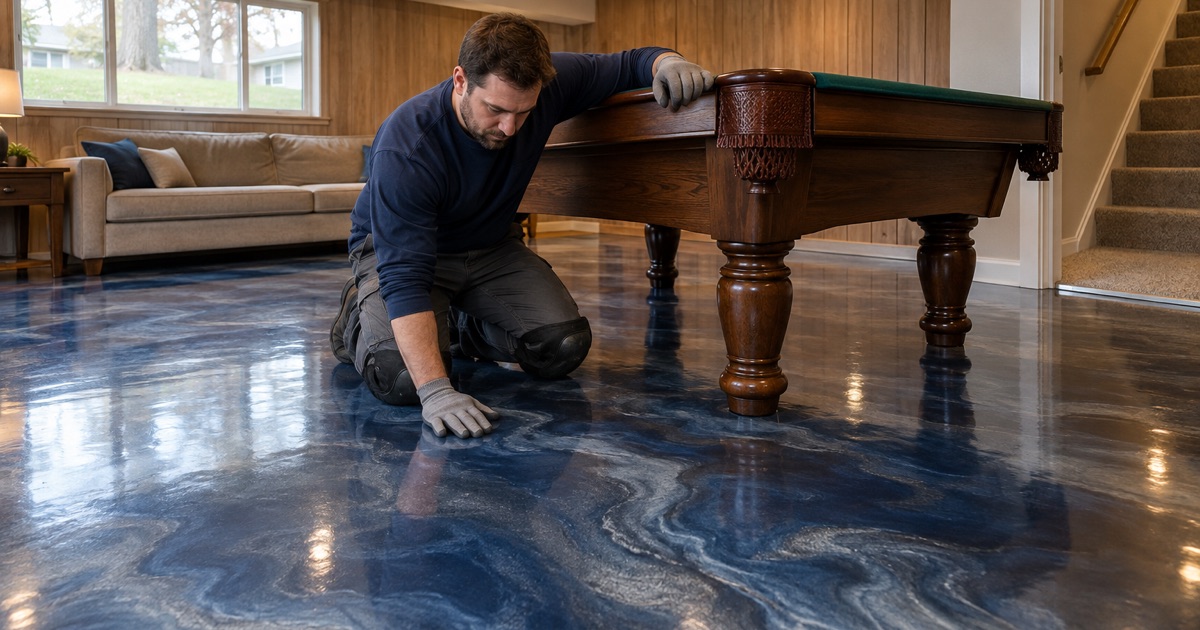
Metallic epoxy uses pearlescent and metallic pigments suspended in clear or tinted resin. As the resin is spread and worked, the pigments move and settle into swirls, ripples and depth that look like polished stone, liquid metal or a lunar surface. No two floors are the same, which is the whole appeal, and it is also why experience matters more on this system than on any other we install.
A metallic finish shows everything beneath it. Trowel marks, patches, outgassing bubbles and uneven areas all telegraph through the clear layers, so the preparation is more demanding than for a flake floor. Our proposals spell out each layer, the coat count and the finished thickness, along with the moisture result and repairs, before work begins.
How a Metallic Epoxy Floor Is Built
Grinding and Slab Repair
The slab is ground with diamond tooling to the profile the system requires, with vacuum dust collection at the machine. Cracks, spalls and pits are filled and ground flush, and old coatings or adhesives are removed completely. Because the metallic layer is self-leveling and reflective, any low spot or ridge left at this stage shows up in the finished floor.
We spend more time here than on most other systems. Joints are filled for a seamless look unless the slab’s movement means they need to stay open, and the whole floor is checked under raking light before the primer goes down, since this is the last chance to fix a flaw cheaply.
Primer and Tinted Base Coat
A penetrating primer seals the concrete and limits outgassing, the release of air from the slab that causes pinholes and bubbles in the layers above. A tinted base coat follows, usually in a color that supports the metallic layer, such as black under silver or charcoal under copper. The base color strongly influences how the finished floor reads.
The base coat also gives the metallic layer an even, nonporous surface to flow across. Applied directly over concrete, metallic resin soaks in unevenly and leaves dull patches, so the primer and base are not optional steps on this system even when the slab is in very good condition.
The Metallic Layer
The metallic epoxy is mixed in batches, poured and spread across the floor, then worked with rollers, brushes, trowels or air to create the pattern. Techniques range from soft, cloudy movement to sharp veining and lava-like ripples. The working window is limited, so the crew moves through the floor in a planned sequence to keep the pattern continuous.
On larger rooms several installers work at once so the wet edges never sit long enough to show a seam. The pattern is set as the resin levels and begins to cure, and it cannot be reworked once it has started to gel, which is why we agree on the style and the amount of movement in advance.
Clear Topcoat
A clear topcoat protects the metallic layer from scratches, chemicals and sunlight. For most homes we use a UV-stable polyaspartic or aliphatic urethane, which resists yellowing and is tougher than epoxy at the surface. A fine anti-slip additive can be mixed in where the floor will get wet, and the sheen can be gloss or satin.
Temperature matters at every one of these steps. Metallic resin flows and sets differently on a cold slab than on a warm one, and a slab close to the dew point can leave a cloudy film on the surface known as amine blush. We check the slab temperature and dew point spread before each coat and adjust the schedule rather than pushing through.
Designing the Look
Colors and Combinations
Metallic pigments come in silvers, golds, coppers, bronzes, blues, greens and pearl whites, and they can be blended. Two or three colors together create more depth and contrast. We make sample boards in your chosen colors and base coat so you can see them in your own lighting before deciding.
Amount of Movement
Some owners want a calm, even shimmer; others want strong swirls and veining. We talk through how busy you want the floor to look and show examples of each technique, since the movement is set as the resin is placed and cannot be adjusted afterward.
Large open rooms usually look best with a consistent technique across the whole floor, while smaller spaces like a bar area or a salon entry can carry stronger effects. If a floor spans more than one room, we plan where the pattern changes so doorways and transitions look intentional.
Sheen and Topcoat Choice
High gloss gives the deepest, most reflective look but shows dust and scuffs. A satin topcoat softens the reflection and hides wear better. In high-traffic spaces we often recommend satin so the floor keeps looking good between cleanings.
Matching the Room
A metallic floor can be the focal point of a basement bar, a showroom or a retail entry, or it can be a quiet backdrop in an office. We consider cabinets, walls, lighting and furniture when suggesting colors. The same pigments can look warm or cool depending on the base coat and the light in the room.
Where Metallic Epoxy Works Best
Basements and Finished Lower Levels
Metallic floors are popular in finished basements, home bars and media rooms, where they create a striking look without grout lines or seams. The moisture question still comes first: we test the slab and use a moisture-mitigation primer when the readings call for one, since vapor pressure under a metallic floor shows as bubbles and spots.
Showroom Garages
In a garage used to show cars rather than work on them, a metallic floor with a tough polyaspartic topcoat gives a high-end finish. It needs the same salt-resistant topcoat and cure timing as any garage floor, and we plan around cold-weather limits for unheated spaces.
We are honest with garage owners about wear. A working garage with jacks, creepers and dropped sockets will scratch a glossy metallic topcoat over time, and road salt and grit act like sandpaper underfoot. For a garage that sees that kind of use, a flake floor is usually the more practical choice, with metallic saved for spaces that are kept for display.
Retail, Salons and Offices
Shops, salons, restaurants and offices use metallic floors to make an entrance memorable. The seamless surface is easy to clean, and a satin topcoat holds up to foot traffic. We phase commercial installs around business hours and choose products inside the Illinois VOC limits for floor coatings.
Living With a Metallic Floor
Cleaning and Care
Dust mop regularly, and wash with a neutral pH cleaner and a soft microfiber mop. Avoid abrasive pads and harsh chemicals, which can dull the topcoat. Felt pads under furniture and mats at entries keep grit from scratching the surface.
Grit is the main enemy of any glossy floor, so the biggest maintenance step is keeping sand and road salt from being ground in. In a garage or entry, a quick sweep after wet weather does more for the finish than any cleaner.
Recoating the Topcoat
In busy areas the clear topcoat may eventually show wear. It can be lightly abraded and recoated to restore the protection and sheen without disturbing the metallic layer below. That is much easier and less costly than replacing the floor, and it is the main reason we put a strong topcoat on every metallic job.
- 20+ Years Coating Concrete
- Moisture Tested Before Pricing
- Free Written Estimates